
Last Friday we finally experienced a long-anticipated morning. About 30 people arrived to witness our president Paul Talbot-Greaves giving a demonstration of a local landscape in watercolour. As he used the society’s modern equipment, everyone in the room had a good view.
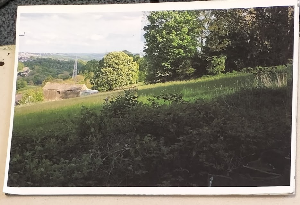
Paul brought along a pencilled sketch and a photo of the scene he had in his mind – he had added trees on his computer, changing the view slightly. He also showed us an edit of it to highlight the balance of his painting like the foundation of a house.


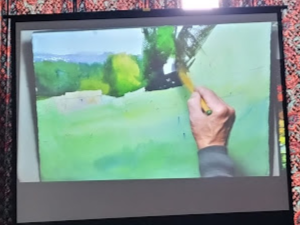
The next step was colour-matching. Paul didn’t use a very heavy paper, just 140lbs. With a big brush he started painting the light areas of sky, building, trees and covered the whole paper. He let the paper dry off naturally, as the use of a hairdryer would freeze it.


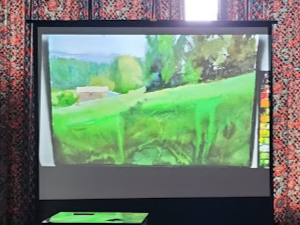
Paul dried out his palette for the second stage and used his initial colour match strip. When the paper got too dry he sprayed it with water, but also used the dry-brush technique in parts. He splashed some water into the painting, flicking his brush to give the impression of grass. For the large shapes of brambles in the foreground Paul used big brushes and assured us that the colours underneath would come through. The edges were softened with a wet brush and Paul added shadows on the building and trees.

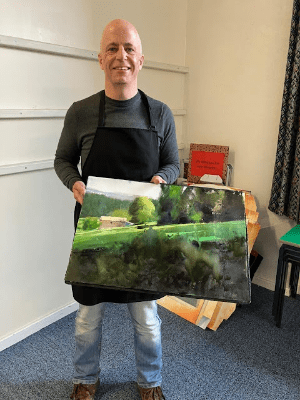
At break we were able to buy materials and greeting cards from Paul or ask for his advice. The finished painting was stunning even though the paint was still wet.















 Halifax Art Society